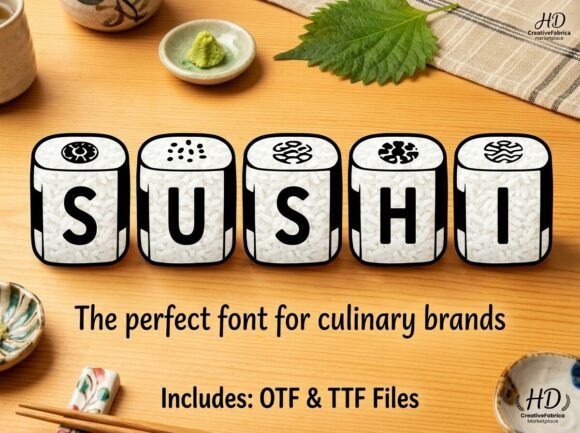
Sushi: The Playful Display Font for Culinary Branding
Imagine a typeface that doesn't just spell out your brand's name but serves it up as an experience. In the bustling world of food and beverage, where first impressions are savored visually before a single bite is taken, typography becomes a silent ambassador of taste and quality. A unique font can transform a simple menu header into an invitation, a social media post into a craving, and a logo into a memorable icon. This is the space where creative design meets culinary passion, and where a font like Sushi finds its perfect home.
A Typeface with a Distinct Flavor Profile
Sushi is not your typical premium font. It’s a display typeface where each character is encased within a charming, three-dimensional sushi roll. The foundation is a set of bold, clean sans-serif letterforms, ensuring the core text remains legible and modern. This clever design choice grounds the playful concept in professional typography, making it far more versatile than a purely illustrative font.
The magic lies in the details. The "containers" mimic artisanal seaweed wrappers with subtle textures, while the interior of each roll is filled with a realistic, textured rice pattern. Topping off each glyph is a distinctive illustrative "filling"—perhaps a slice of salmon, an avocado wedge, or a sliver of cucumber. This creates a rhythmic, appetizing flow across your headlines, radiating a sense of professional whimsy that’s hard to ignore. It’s a creative font that feels both fun and thoughtfully crafted.
Practical Applications for the Modern Culinary Brand
The true test of a specialized typeface is its real-world utility. Sushi shines brightest when applied to projects that need to communicate freshness, creativity, and a strong culinary identity. It’s an extraordinary choice for more than just Japanese cuisine; its playful sophistication can elevate a wide array of food-related ventures.
Restaurant & Food Truck Branding: For a sushi bar, ramen shop, or a fusion food truck, this font can become the cornerstone of the brand identity. Use it for the primary logo to instantly signal the cuisine and the establishment's creative spirit. It ensures your headline is as memorable as a signature dish.
Menus and Packaging Design: Imagine section headers on a menu or the name of a specialty roll rendered in Sushi. It adds a layer of visual storytelling that engages diners before they order. Similarly, for packaging design on sauces, snacks, or meal kits, this typeface can make a product pop on a crowded shelf, communicating artisanal fun and high-impact style.
Digital Presence & Social Media Graphics: In the fast-scroll world of Instagram and TikTok, stopping power is everything. Sushi is perfect for creating vibrant social media headers, promotional posts for new menu items, and engaging story graphics. It helps maintain visual consistency across platforms, strengthening brand recognition with every post.
Events, Merchandise, and Print Materials: Think beyond the restaurant. Use it for event invitations for a sushi-making class, merchandise like t-shirts and hats for a food festival, or eye-catching posters for a local market. Its distinctive character makes it a standout choice for any print material where you want to inject personality.
Integrating Sushi into Your Design Workflow
Adopting a specialty font like this requires a thoughtful approach to ensure it enhances, rather than overwhelms, your project. Here’s how to integrate it effectively.
Purposeful Pairing is Key: Sushi is a headline and display font, designed for short, impactful bursts of text—like a logo, a title, or a call-to-action. For body copy, you’ll need a highly readable companion. Pair it with a simple, neutral sans-serif font (like Open Sans, Lato, or even a classic serif for contrast) to let the main attraction shine without sacrificing readability in paragraphs or descriptions.
Context is Everything: While fantastic for culinary branding, consider the overall tone of your project. Sushi’s playful, illustrative style might not be the right fit for a high-end, minimalist steakhouse aiming for pure sophistication. It thrives in environments that celebrate creativity, fun, and a modern, approachable vibe.
Test for Readability and Scale: Always test the font at the size it will be viewed. Its detailed fillings are most effective at larger scales. At very small sizes, the intricate details might become muddled. Use it where it can be appreciated—in headers, logos, and featured text—not in fine print or lengthy captions.
Review the Character Set: Before purchasing a commercial font, always review the full character set. Check for the specific glyphs you need, including numerals, punctuation, and any special characters. Ensure the licensing aligns with your intended use, whether for a single client project, unlimited commercial use, or digital products.
Building a Cohesive Visual Language
Using a font like Sushi is more than a typographic choice; it’s a strategic branding decision. It contributes directly to your brand identity, making it instantly recognizable and emotionally resonant. When your typography, color palette, and imagery all work in harmony, you build a powerful and consistent visual language.
This consistency is what builds trust and recognition with your audience. A customer who sees your distinctive Sushi-styled header on a menu, then on your Instagram, and finally on your food truck wrap, begins to associate that fun, appetizing visual with the quality of your food. It turns a simple typeface into a valuable design asset that supports your marketing goals and helps your business stand out in a competitive landscape.
In the end, the right font choice is about communication. It tells a story, sets a mood, and connects with your audience on a visual level. For projects that aim to serve up creativity, freshness, and a dash of playful charm, a typeface like Sushi offers a unique and memorable way to plate up your brand’s message.