Daisy Crest: A Hand-Drawn Font for Charming, Nature-Inspired Design
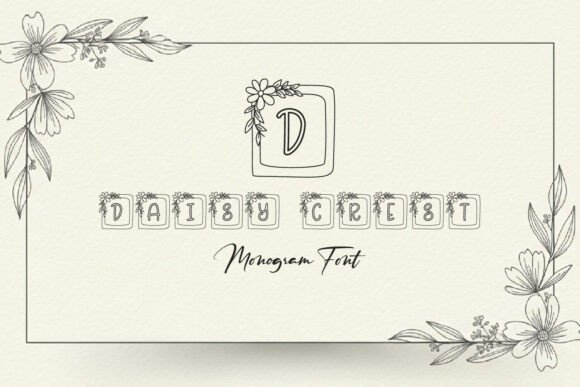
There’s a particular kind of design challenge that requires more than just clean lines and modern simplicity. Sometimes, a project calls for a touch of warmth, a hint of whimsy, and an unmistakable sense of personality. It’s the difference between a generic invitation and one that feels like it was crafted with care, or a logo that simply identifies a brand versus one that tells a story. This is the space where a typeface like Daisy Crest shines. More than just a collection of letters, it’s a hand-drawn monogram font designed to infuse creative work with a friendly, elegant, and organic charm. Featuring delicate floral corners and a minimalist square frame, it bridges the gap between playful illustration and sophisticated typography, making it a versatile asset for a wide range of visual projects.
Capturing a Handcrafted Aesthetic in a Digital World
In an era saturated with slick, algorithm-generated graphics, the human touch stands out. Daisy Crest leverages this appeal. Each character feels intentionally drawn, not perfectly manufactured. This inherent imperfection is its strength, lending authenticity and approachability to any layout. The floral corners aren’t just decorative; they act as built-in design elements, framing monograms or initials with a subtle botanical motif that evokes springtime gardens and natural beauty. The minimalist square frame provides structure, ensuring the font remains legible and orderly despite its decorative nature. This careful balance is what makes it a premium font choice—it solves a specific aesthetic problem with thoughtful design.
For a small business owner or entrepreneur, this font style can be a cornerstone of a brand identity that feels personal and curated. Imagine a boutique bakery, a floral studio, or a handmade skincare line using Daisy Crest for their logo. The font immediately communicates a brand story of craftsmanship and attention to detail. It’s not a serif font for corporate reports, nor a stark sans serif font for tech startups. It’s a script font alternative—a handwritten font with more structure and elegance, perfect for brands that want to feel warm, creative, and trustworthy.
From Packaging to Social Media: Where Daisy Crest Comes Alive
The true test of any design asset is its real-world application. Daisy Crest’s versatility is one of its key advantages. Its style adapts fluidly across different mediums, helping maintain visual consistency—a critical component of strong branding and professional presentation.
- Packaging Design: Use the font for product labels, box designs, or sleeve wraps. Its charm can elevate a simple package into something that feels like a gift. The floral corners can be used to highlight a product name or a special feature, like "Limited Edition."
- Social Media Graphics: In the fast-scroll of Instagram or Pinterest, a distinctive font stops the thumb. Daisy Crest is excellent for creating quote graphics, story headers, or sale announcements that feel unique and on-brand. It helps build audience engagement by fostering a recognizable visual voice.
- Invitations & Print Materials: This is a natural home for the font. Wedding stationery, event invites, thank-you cards, and even restaurant menus benefit from its elegant yet friendly character. It sets a mood before a single word is read.
- Logo Design & Brand Marks: As a monogram font, it’s ideal for creating initial-based logos or brand marks. The square frame makes it particularly effective for social media profile pictures, app icons, or wax seals, providing a contained, polished look.
- Editorial & Web Design: While not for body text, Daisy Crest can be a powerful display font for blog headers, chapter titles in a digital magazine, or featured quotes on a website. It adds personality without sacrificing the readability of the accompanying sans serif font or serif font used for paragraphs.
For the content creator or blogger, it offers a way to create consistent, branded graphics that tie a visual identity together across platforms. For a marketer, it’s a tool to craft campaigns that feel more human and less corporate, potentially improving connection with the target audience.
Making It Work: Practical Tips for Using Daisy Crest
Choosing the right font is only half the battle; using it effectively is what makes a design succeed. Here’s how to integrate Daisy Crest into your workflow thoughtfully.
Font Pairing is Crucial. A decorative font like Daisy Crest needs a simpler partner. Pair it with a clean, geometric sans serif font (like Montserrat or Lato) for a modern, balanced look. For a more traditional or elegant feel, a classic, light-weight serif font (like Garamond or Baskerville) can work beautifully. The key is contrast: let Daisy Crest be the star for headlines or monograms, and let the paired font handle the heavy lifting of readability in longer text.
Consider the Context and Scale. This is a display font, meaning it’s designed for impact at larger sizes. Test it at the size you intend to use. Its intricate details might get lost if used too small on a busy background. Always prioritize readability. If the floral elements obscure a letter at a certain size, simplify the use—perhaps only use the plain letterforms without the frame for that specific application.
Review All Included Styles. A quality commercial font like Daisy Crest often comes with more than just the basic letters. Check for:
- Alternate characters (swashes, ligatures)
- Full punctuation and symbol sets
- Number and multilingual support
- Different file formats (OTF, TTF, WOFF)
Understand the License. Before using any premium font in a commercial project, always read the licensing agreement. This is a non-negotiable part of professional practice. The license will clarify what is and isn’t permitted—such as use in digital products for sale, on merchandise, in client work, or in software/apps. Respecting the license protects you and supports the font designers who create these valuable modern typography resources.
Aligning Typography with Your Creative Goals
Ultimately, the fonts you choose are silent ambassadors for your project’s message. A typeface like Daisy Crest isn’t a universal solution; it’s a specific tool for a specific job. It’s for projects that aim to feel handcrafted, warm, approachable, and connected to nature.
Before selecting it, ask: Does my project want to feel more organic or more technical? More personal or more institutional? More whimsical or more serious? If the answers lean toward the former, Daisy Crest could be the perfect fit. Use it to add a layer of visual storytelling to your packaging design, to make your social media graphics more memorable, or to give your brand identity a distinct, friendly voice. When typography aligns with intent, it stops being just decoration and becomes a powerful part of the communication, helping your work not only stand out but also connect on a more human level.