Dusty Forge: Where Frontier Grit Meets Modern Design
There’s a certain magic in the weathered wood of an old barn, the faded paint on a roadside sign, and the bold, no-nonsense lettering that once advertised everything from blacksmiths to general stores. This is the visual language of the American frontier—unpretentious, sturdy, and full of character. For designers and creators seeking to capture that authentic, rugged spirit, finding the right typographic voice is crucial. Enter Dusty Forge, a display typeface that doesn't just mimic the past; it feels like it was pulled directly from it, offering a powerful tool for anyone looking to inject their work with timeless, adventurous charm.
The Anatomy of a Western Icon
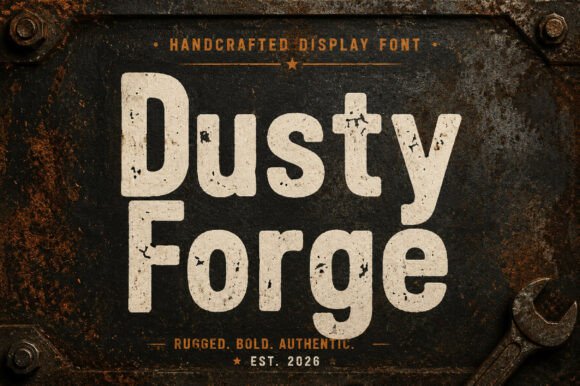
Dusty Forge isn't just another font with a rustic filter applied. Its design philosophy is rooted in the raw aesthetics of vintage signage and saloon typography. The letterforms are built with a strong, bold structure, but it’s the subtle imperfections and handcrafted details that give it life. Notice the slightly uneven edges, the weighted strokes that mimic a brush or chisel, and the serifs that feel carved rather than typeset. This combination creates a typeface that is both commanding and approachable, rugged yet refined. It carries the weight of history without feeling archaic, making it incredibly versatile for contemporary projects.
When you choose a font like this, you’re selecting more than a set of characters; you’re choosing a personality. The "dusty" quality implies a story, a sense of place and time. It speaks of craftsmanship, durability, and a connection to tradition. This makes it an exceptional choice for projects where you need to convey strength, authenticity, and a narrative depth that goes beyond the surface. It’s the typographic equivalent of a well-worn leather jacket—immediately recognizable and full of attitude.
From Brand Identity to Packaging: Practical Applications
The true test of a great display font is its real-world utility. Where does a typeface like Dusty Forge shine? Its applications are as wide as the open range.
- Logo Design & Branding: For businesses in craft brewing, barbecue, outdoor apparel, heritage goods, or artisanal products, Dusty Forge can become the cornerstone of a brand identity. It instantly communicates a story of handcrafted quality and rugged individualism. Paired with a clean sans-serif for body text, it creates a balanced and professional look.
- Packaging & Labels: Imagine this font on a whiskey label, a hot sauce bottle, or a bag of small-batch coffee. It grabs attention on a crowded shelf and promises a product with substance and character. Its high legibility at display sizes ensures the product name is clear, while its style builds instant recognition.
- Posters & Event Graphics: Whether promoting a rodeo, a music festival, a vintage market, or a local fair, Dusty Forge sets the tone perfectly. It’s ideal for headlines and titles, creating an exciting, thematic entry point for any event.
- Merchandise & Apparel: T-shirts, hats, and posters emblazoned with this typeface sell a lifestyle, not just a product. It appeals to those who value adventure, nostalgia, and a break from overly polished, generic design.
- Digital Presence: Use it strategically for website headers, blog post titles, or social media graphics to create a strong visual identity. On platforms like Instagram, where first impressions are everything, a distinctive font can make your content stop the scroll and reinforce your brand’s unique voice.
Pairing, Polish, and Professional Presentation
Using a powerful display font effectively requires a bit of strategy. The goal is to let its personality shine without overwhelming the viewer or sacrificing clarity. Here are some practical considerations for working with a font like Dusty Forge:
Master the Font Pairing. A strong display font needs a supporting cast. Pair Dusty Forge with a simple, highly readable serif or sans-serif font for body copy, captions, and smaller text. Think of it as the star quarterback and the reliable offensive line—the display font gets the glory, but the body font does the essential work of delivering the message clearly. Test combinations to find the right balance; a modern geometric sans-serif can create an interesting contrast, while a classic serif can enhance the traditional feel.
Consider the Context and Readability. While Dusty Forge is designed for impact, it’s best used for headlines, logos, and short bursts of text. Its detailed nature means it’s not optimized for long paragraphs of body text. Always prioritize readability. If you’re using it on a website, ensure the headline text is large enough for the details to render crisply. In print, test a small proof to see how the ink settles into the letterforms.
Explore the Included Styles. A quality premium font often comes with more than one style. Check if the Dusty Forge family includes alternate characters, ligatures, or stylistic sets. These extras can add a layer of customization and uniqueness to your designs, allowing you to fine-tune the typographic texture to perfectly match your vision.
Understand the Licensing. For any commercial project—whether it’s a client’s logo, merchandise for sale, or marketing materials—ensure you have the correct commercial license. This is a non-negotiable part of professional design practice. It protects you legally and supports the type designers who create these invaluable assets.
Crafting Memorable Visual Stories
Ultimately, typography is about communication. The fonts you choose tell a story before a single word is read. Dusty Forge offers a narrative rich with Americana, strength, and adventure. It’s for the designer building a brand for a craft distillery, the entrepreneur creating packaging for artisanal goods, or the content creator developing a cohesive visual theme for a travel blog. It helps achieve visual consistency, making every touchpoint—from a website banner to a business card—feel connected and intentional.
In a digital landscape saturated with sleek, minimalist design, there’s a growing appreciation for textures that feel human and stories that feel grounded. This typeface provides that connection. It’s not just a design asset; it’s a bridge to a visual heritage that continues to resonate. By thoughtfully integrating it into your work, you can create designs that don’t just look good, but feel authentic—projects that carry an air of tradition and leave a lasting, memorable impression.