Why Designers Keep Reaching for Hello Rainbow
There's a certain magic in lettering that feels human. You know it when you see it—the slight imperfection, the warmth, the sense that someone's hand actually touched the page. That's exactly what draws people to Hello Rainbow, a handwritten font that manages to feel both playful and polished at the same time. It doesn't try to mimic casual scrawling or overdo the flourishes. Instead, it sits in that sweet spot where personality meets professionalism, making it surprisingly versatile for a wide range of creative work.
A Typeface That Feels Like a Conversation
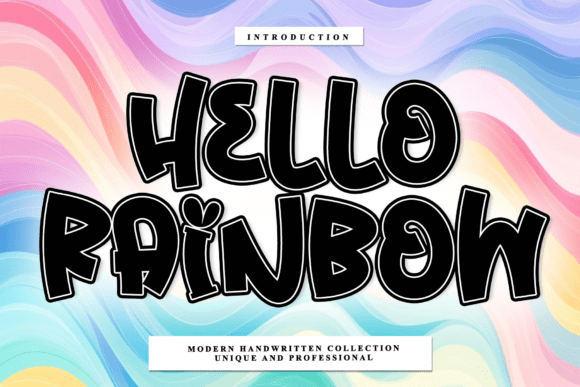
What sets Hello Rainbow apart from countless other script fonts is its approachability. Each letter carries a distinct character without veering into illegibility. The strokes flow naturally, with enough variation to keep the eye engaged but not so much that words become difficult to parse. If you've ever struggled with handwritten fonts that look gorgeous in a headline but fall apart in a sentence, you'll appreciate the care that went into this design.
The letterforms have a gentle bounce to them, giving text a rhythm that feels organic rather than mechanical. Ligatures connect certain letter combinations smoothly, and the overall texture avoids that overly digitized look that plagues so many script typefaces. Whether you're setting a single word or a short phrase, the result tends to feel inviting—like a note passed between friends rather than a corporate memo.
Where Hello Rainbow Actually Works
Let's get practical. A font can be beautiful on its own, but the real question is whether it earns its place in your toolkit. Here's where this particular handwritten font tends to shine:
- Logo design and brand identity: For businesses that want to convey warmth, creativity, or a personal touch—think bakeries, boutique studios, lifestyle brands, or independent consultants—Hello Rainbow offers a distinctive voice without feeling amateurish.
- Packaging design: Product labels, box graphics, and wrapping details benefit from lettering that feels crafted rather than mass-produced. A font like this can elevate a small-batch candle or artisan chocolate brand instantly.
- Social media graphics: Instagram quotes, Pinterest pins, and story overlays often need a typeface that pops at small sizes while still feeling personal. Handwritten fonts excel here because they break the monotony of sans serif feeds.
- Wedding invitations and event materials: Save-the-dates, menus, place cards, and thank-you notes all call for a typeface with elegance and emotion. Hello Rainbow strikes that balance between formal and friendly.
- Blog headers and editorial design: Lifestyle bloggers, food writers, and creative entrepreneurs often pair a script font like this with a clean sans serif for body copy, creating visual hierarchy that guides readers naturally.
- Merchandise and print products: Tote bags, mugs, greeting cards, and posters can all benefit from a display font that carries personality. When you're selling physical goods, the typography on the packaging often does the first round of storytelling.
- Digital products and marketing assets: E-book covers, lead magnets, email headers, and course branding materials frequently need a creative font that signals quality without looking corporate.
Pairing Hello Rainbow with Other Typefaces
One of the most common mistakes with handwritten fonts is using them for everything. A script font set as body text at 11 points will exhaust your reader before they finish the first paragraph. The smart approach is to treat Hello Rainbow as an accent—a headline font, a pull quote specialist, a logo typeface—while letting a more neutral companion handle the heavy lifting.
A simple sans serif like Montserrat or Lato works beautifully alongside it, providing clean readability for longer passages. If your brand skews more traditional, try pairing it with a light serif like Playfair Display or Cormorant for a sophisticated contrast. The key is testing combinations in context. Set a mock headline, place your body text beneath it, and step back. Does the pairing feel balanced, or does one font overpower the other? That five-minute exercise saves hours of revision later.
Pay attention to weight and spacing, too. A bold, tightly kerned sans serif next to a flowing script can feel jarring. Give the handwritten elements room to breathe—slightly increased letter spacing or a generous margin around the text block often makes all the difference.
Readability Isn't Optional
Even the most stunning display font fails if people can't read it. With Hello Rainbow, legibility is generally strong for short-form applications, but context still matters. Dark text on a light background will always outperform light text on a busy photograph. If you're layering type over an image, consider adding a subtle overlay, shadow, or solid shape behind the text to maintain clarity.
Size matters as well. Handwritten fonts typically perform best at larger point sizes—think 24 points and above. At smaller sizes, the connecting strokes and stylistic details can blur together, especially on screens with lower resolution. Reserve this typeface for headlines, logos, callouts, and decorative elements rather than paragraphs of running text.
Understanding What You're Getting
Before committing to any premium font for a project, it's worth reviewing the full character set and included styles. Hello Rainbow typically comes with uppercase and lowercase letters, numerals, punctuation, and a selection of special characters. Some versions may include stylistic alternates or additional ligatures that give you more creative flexibility.
Check whether the font supports the language you need. If you're creating materials for a multilingual audience, verify that accented characters are included. It's a detail that's easy to overlook until you're mid-project and realize a key symbol is missing.
Licensing is another consideration that deserves attention upfront. If you're using the font for client work, merchandise, or any commercial application, confirm that the license covers your intended use. Most premium font licenses distinguish between personal and commercial use, and some require an extended license for products like print-on-demand merchandise. Understanding these terms before you start designing prevents headaches down the road.
Making It Your Own
The beauty of a well-crafted handwritten font is that it adapts to different brand voices depending on how you use it. Pair Hello Rainbow with earthy tones and natural textures, and it feels organic and artisanal. Set it against bold geometric shapes and saturated colors, and it becomes modern and energetic. Use it sparingly in a minimalist layout, and it adds just enough warmth to keep the design from feeling sterile.
Think about the story you're telling. A children's educational brand might use this font for playful chapter titles, while a wellness coach could use it for motivational quote graphics. A food blogger might reach for it when designing recipe cards, and a small-batch skincare company could feature it on product labels. The font doesn't dictate the narrative—it supports it.
Experiment with color, too. Handwritten lettering looks striking in unexpected hues—deep forest green, dusty rose, warm terracotta—rather than defaulting to black. The organic quality of the strokes pairs well with palettes drawn from nature or vintage references.
Bringing It All Together
Finding the right typeface for a project is less about chasing trends and more about matching visual tone to intention. Hello Rainbow works because it offers genuine personality without sacrificing usability. It's the kind of font that earns a permanent spot in a designer's rotation—not because it's flashy, but because it reliably delivers that human touch so many projects need.
Whether you're building a brand from scratch, refreshing a social media presence, or designing a one-off invitation, having a go-to handwritten font like this one in your collection means you're always ready to add a layer of authenticity to your work. The best typography doesn't shout. It connects. And that's exactly what a thoughtfully designed script typeface does when you give it the right context to thrive.